Hi, and welcome. If you're reading this, you've found the very first post on the Payload Components blog — so let me say hello properly.
I'm Ducksss, and I'm building Payload Components in the open. This blog is where I'll write down the things that don't fit in the docs: what shipped, what I'm still figuring out, and the reasoning behind decisions. Less changelog, more "here's what I was thinking." I'd rather you understand why a thing works the way it does than just trust that it does.
The itch that started this
Here's the honest origin story. Every Payload project I touched needed the same handful of surfaces — a hero, a feature grid, some cards. Copying the block files was never the hard part. The hard part was everything after the paste.
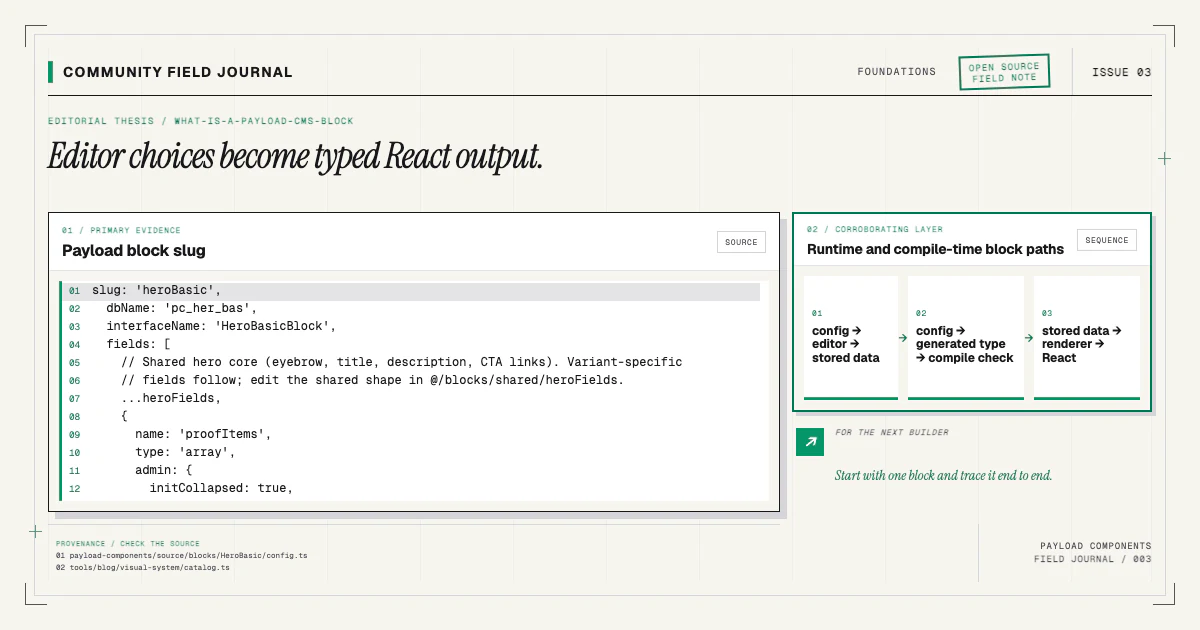
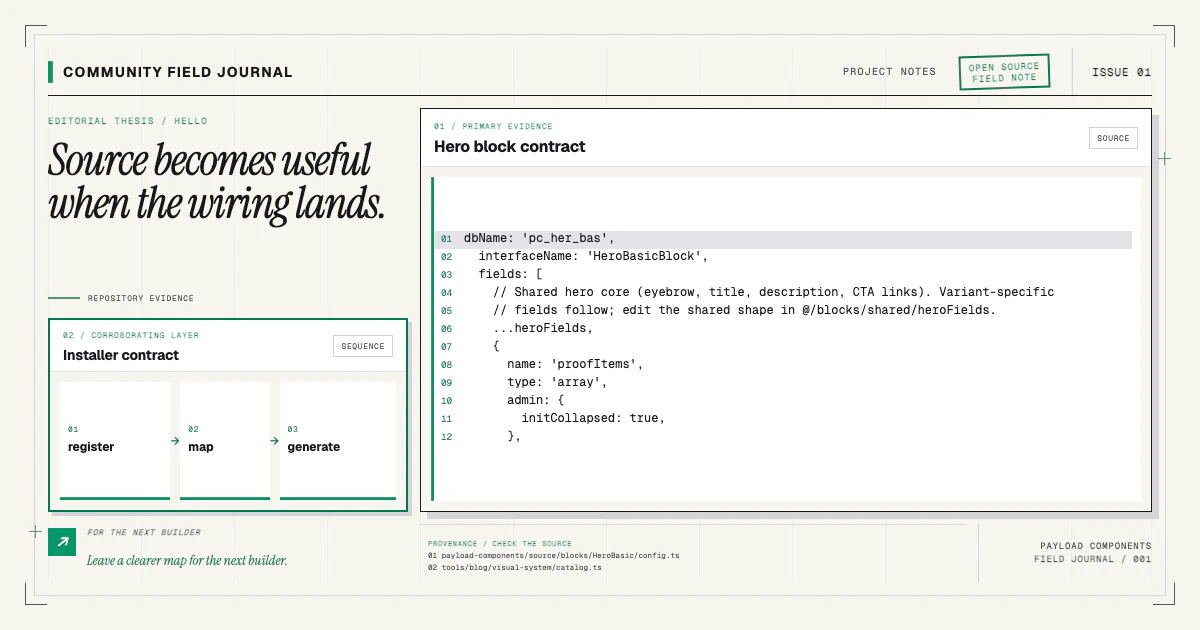
Because a block isn't really alive until four more edits land:
- register it in your Pages collection
- map it in your render switch so it actually paints
- regenerate your types
- regenerate the admin import map
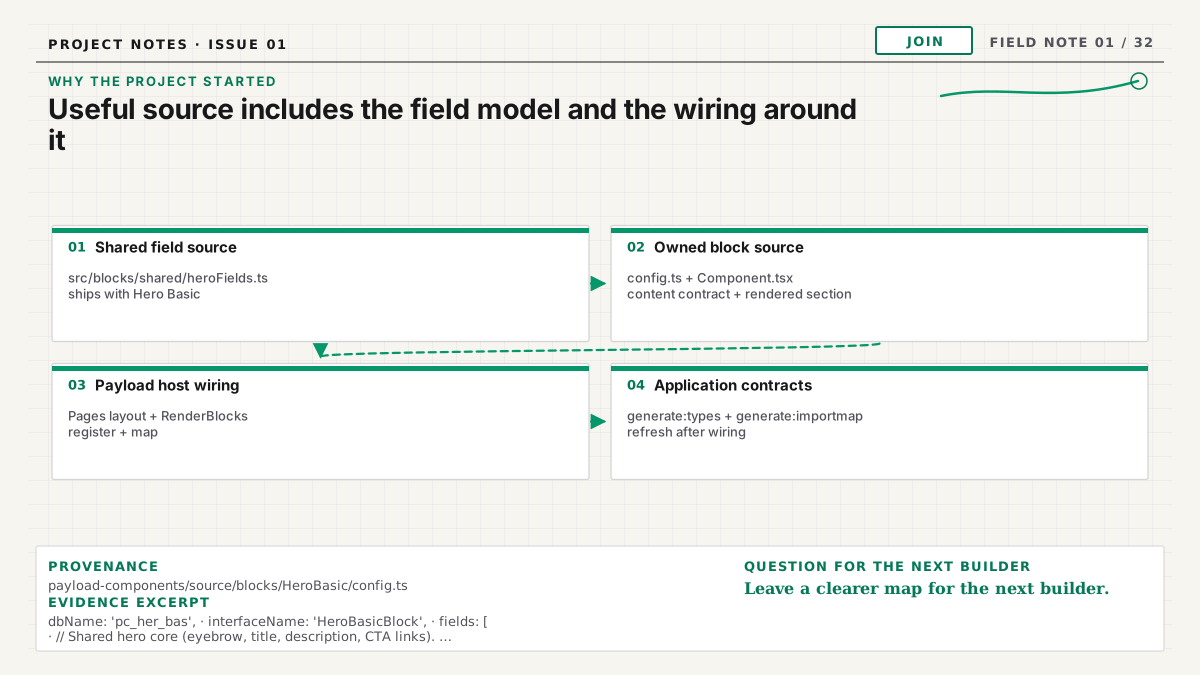
None of those are difficult. They're just easy to forget — and when you miss one, the block doesn't error, it just silently never shows up. You copy, you move on, and twenty minutes later you're wondering why nothing renders. Doing that little dance across one project is fine. Doing it across the second project, and the tenth, is what slowly wore me down.
So I made the second install free
That frustration is the whole reason payload-components add exists. It copies the block source
and does those four edits for me, then leaves the result as a plain git diff I can read before
I trust it.
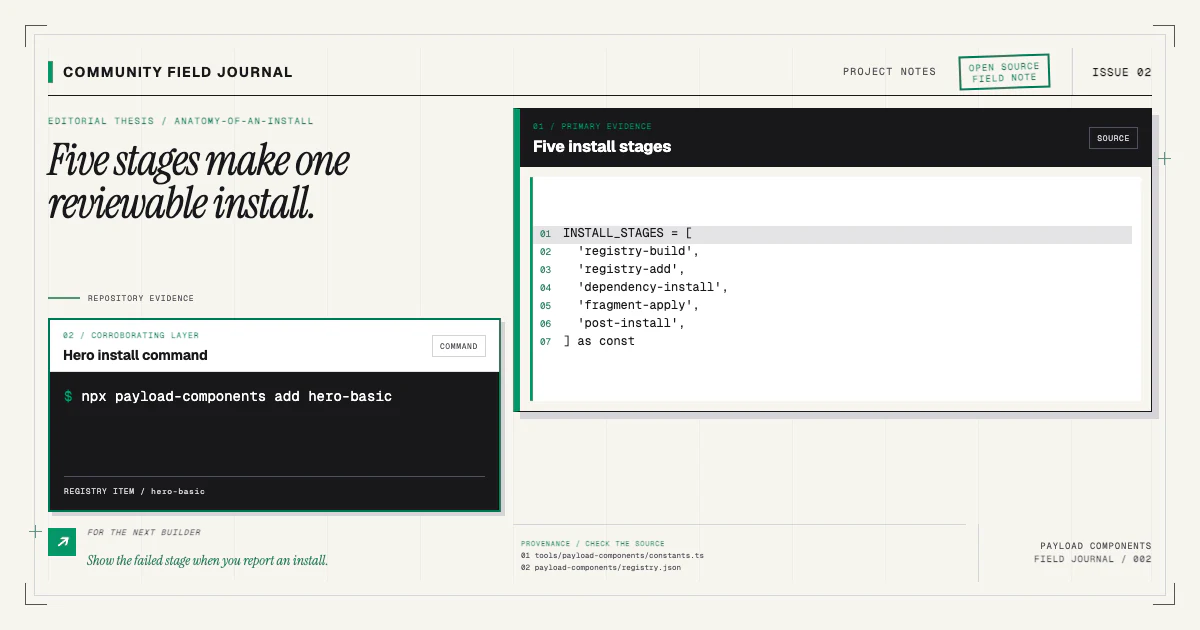
npx payload-components add hero-basicOne command, and the wiring I used to do by hand just shows up as a reviewable change. That's it. That's the thing I wished I'd had.
Why it's open, and MIT
I want you to read the installer before you run it — genuinely, that's the point, not a disclaimer. The registry, the CLI, the components, and this site are all one MIT repository. No pricing, no license keys, no gated tier. It grows from real installs and pull requests, from people like you using it and telling me where it falls short.
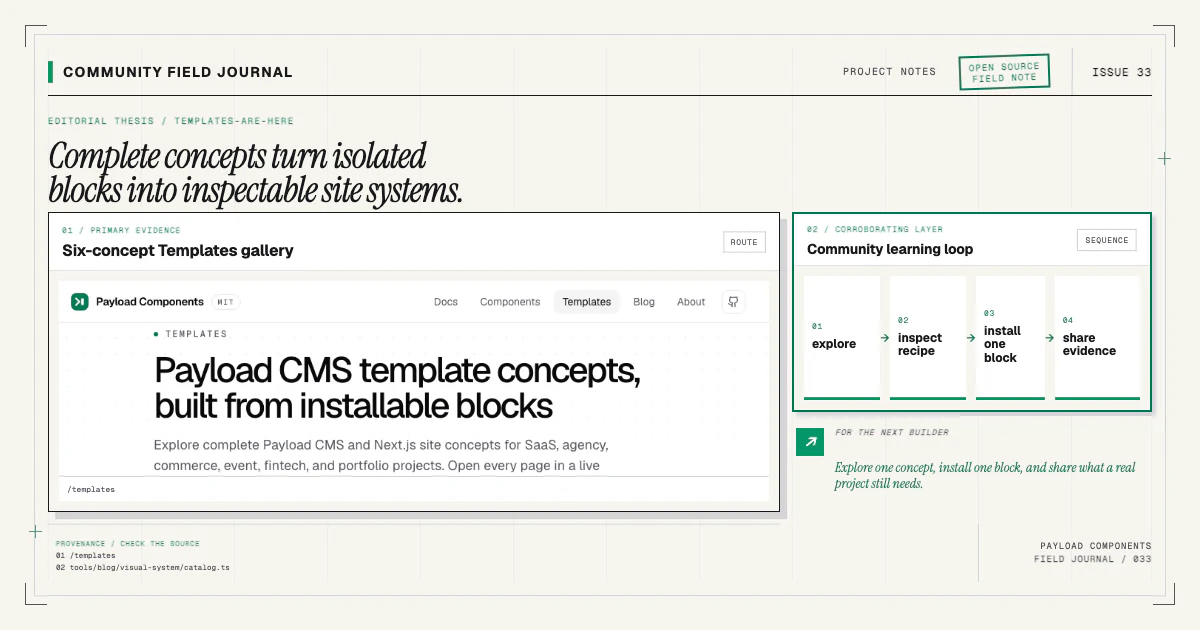
The catalog is growing in public, with more blocks on the way. If you run Payload v3 on Next.js, try it on a throwaway branch, read the diff, and tell me what breaks.
Stay a while
If you want the details, the docs are the place to start, and you can browse what's available in the components catalog. My next post opens up the installer and shows exactly how the wiring happens, if you're the kind of person who likes to see under the hood (I am).
Otherwise — thanks for stopping by. Come build with me, open an issue, or just say hi.
— Ducksss